Make America Read Again

Believe it or not, I averaged reading one book a week while on maternity leave with my youngest child 17 years ago. Always an avid reader from childhood, the pace of feedings and cuddling actually lent itself to my being able to get through as many books as I did. I also had a good baby who slept as long as he was fed and dry.

With the advent of smart phones and Netflix and other streaming apps, my reading habit went by the wayside. And that’s no bueno. As a writer, reading is crucial to my craft. It’s the way one stretches their brain with new perspectives and use of language. But man, it’s just so easy to curl up with your phone to catch the latest episode of whatever I missed from days before.

Alas, I have recommitted to my love of books (memoir, biography, and historical fiction are among my faves). I’ve been really working on shutting off my phone an hour before I sleep and reading, and every time I do that, I notice a significant difference in the depth and overall quality of my sleep. So, I highly recommend that.

During quarantine, books have been a lifeline for many and let’s be bluntly honest: people who read are smarter than people who don’t. We just know more. You want to know more? Read.

With two weeks left before Christmas, I highly recommend gifting books for those on your Christmas list. And here is a list to get you started.

  1. A Promised Land by Barack Obama

Not only is this a behind-scenes-look at his rise to the presidency, but it’s peppered with stories of his journey as a father and husband. You’ll also learn a ton about the inner workings of American government, which has actually been very interesting to me.

2. Walking With the Wind: A Memoir of the Movement by John Lewis
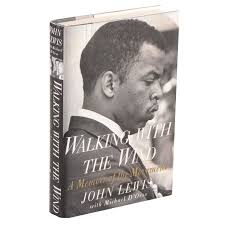
Are you detecting a theme here? This is a fascinating, courageous look at a once-in-a-lifetime type of person. It’s humorous at times, inspiring all the time and honest. Though written in the 90s, many of the issues he grappled with in congress are still issues pressing us today. And that will make you think.

3. Becoming by Michelle Obama

There is a reason her book tour was a mega block buster event with a Netflix documentary to boot. Michelle Obama’s life thus far is extraordinary, and she still has so much more living to do and her story will inspire you.

4. Becoming by Cindy Crawford

That’s right two books with the same name, but very different. Both Michelle Obama and Cindy Crawford are born and bred Illinois girls, super smart, and legendary in their own rights. Crawford’s book features some of her best-known photos from her modeling days with the back stories behind them. Additionally, she tells the story of her ascent from small town girl to one of the most iconic models of our time. If you have fans of fashion and photography on your list, this is a good one.

5. Finding My Voice by Nadiya Hussain

If you are a fan of the Great British Baking Show, you will remember Nadiya Hussein’s season and her amazing win. That event catapulted a simple mom and wife from her traditional and somewhat inhibiting life to cooking/baking/presenting superstardom. And, she’s got some of her favorite recipes in it. The book is honest and raw at times, but always hopeful and positive in tone. It’s a great read (and mini cookbook).

While all of these titles can be found on Amazon, this is a great time to support local indie bookstores or even indie bookstores online. They are really hurting right now, and Jeff Bezos has made enough money off this pandemic, don’t you think?

https://www.afar.com/magazine/the-best-independent-bookstores-in-the-united-states
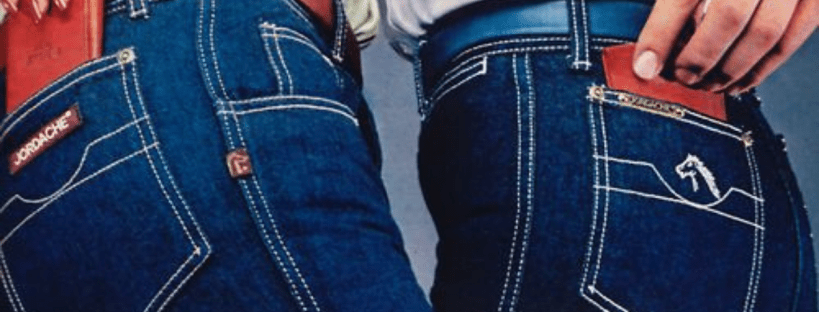
Horse Butt Jeans

Do five-year-olds pay close attention to high fashion for adults? Can you pull a kindergartner out of coloring and ask him or her about Louboutins? No and No. But somewhere between Scooby Do and reruns of the Brady Bunch, the marketing geniuses at Jordache figured out a way to get this child just a few years clear of diapers, to covet dark rinse, high rise, denim. The commercial stressed the thing everyone who was anyone wanted: The Jordache Look.

They were the exact kind of pants disco queens of 1980 rocked NYC in on a Saturday night. I was five, but I knew disco. I watched Solid Gold and TV. Lots of TV. I remember noticing these dark indigo denim wonders everywhere. Between Jordache and Sergio Valenté, suddenly the rear ends of average Americans from coast-to-coast were covered in dark denim and often with a horse on the butt. And these folks at either designer were quite smart—they didn’t leave kids out. Now your entire family—dad, mom, kids—could all look like disco queens! And believe me—that was the epitome of cool.

While other girls were saving or begging for Strawberry Shortcake dolls and Wonder Woman Underoos, I set my heart on having a galloping horsehead embroidered on a burgundy strip of fabric emblazoned on my behind. (But I also craved Strawberry Shortcake dolls and Wonder Woman Underoos).

Designer jeans in those days cost you a cool $35 or so, including the kid’s versions. Considering I can get a five-year-old a pair of jeans at Target for $15 today, that was a pretty hefty bit of coin for a child to be clad in designer denim. But did I mention how badly I wanted them? Every time we went to Bamburgers (suburban New Yorkers of the 80s will know), a department store akin to Macy’s, we’d enter through the side closest to the kids’ section. And every time, I’d beeline to the rack with the Jordache jeans. I can still see it—a circular rack of hanging denim in one resplendent shade of very dark blue.

Around this time—kindergarten in the 1980-1981 school year—I was dealt the news that was to change my existence to that point. I was going to be a big sister. To be honest, I wasn’t upset about that. By that time most every child my age had a younger sibling, so this news was a long time coming. But that wasn’t going to get in the way of my quest of my Jordaches. My parents wised up to the idea that they could channel my horse jeans hunger for their gain. I was told they’d spring the $35 if I’d do a few chores for payment and saved that money toward the pants. Even at age 5, I was no dummy in the face of opportunity.

I did some household tasks my parents likely had to redo when I wasn’t looking, but I was diligent and managed to save $5. I don’t know how long it took me, but it happened. Realizing I wasn’t likely to make the rest of the $30 anytime soon, and likely motivated by the fact that I was going to cease to be the queen bee child and they wanted to offer me a consolation prize, the ‘rents called it even. All that was left was that hard-earned foray to Bamburgers to change my life forever.

The day finally came. Straight to the rack in the girls’ section with blessed jeans went me. As wise parents often do, my jeans were selected a size up for them to last beyond a season. That meant belt-wearing and cuffing in the interim, but I didn’t care. The Jordache look wasn’t limited to one style of horse on the tag on the rear pockets, oh no. They featured several different stitching options—sometimes the embroidered horsehead directly on the pocket, and others more traditional: embroidered patterns on the pocket, with the horse and Jordache on a burgundy tag. I went the traditional route. Always bet on the classics.

When I got those jeans home, I tried them on and pranced around. They were hung in my closet with the admonition that they were not to wear to go over to Gary the next-door neighbor’s house to play in. They were for special occasions only. I loved them so.

So much so, that I used commercial breaks during afternoon Flintstones to trot to my closet just to look at them.

I finally got to break them out for that special occasion: April 2, 1981. The day my sister was born.

Alas, I was burning with a fever that day. A psychosomatic reaction to this disruption in my life? Maybe. But I’ll tell you what rallied me up and out of bed: my Jordache jeans. This baby sister of mine was going to meet me clad in my hard-won power suit with the horsehead on the butt or not meet me at all. Such was the depth of my love.

Be Grateful for Our Healthcare Heroes

Happy Thanksgiving readers (all five of you! j/k). This will be a super short post today, but I wanted to stop here and remind you all that even though this has been a difficult year for us, we can always find something—however small—to be thankful about.

Cultivating a spirit of gratitude has been proven to improve low spirits and change attitudes for the better. It’s not easy, I know. But even the acknowledgment that there are still blessings to give thanks for and hope in the blessings that are still to come your way can make a difference.

I’d like to say that all of us especially in the United States are hunkering down in our own homes and eschewing our normal larger celebrations. But unfortunately, all the warnings about making some sacrifices this year have fallen on a lot of deaf years. Shamefully, there’s only been a 10% drop in travel for this holiday.

So, who can we really give thanks for this past year, right now, and in the months to come? Our healthcare heroes. They are the ones still working today at hospitals and clinics everywhere. They are the ones taking and processing COVID tests, and they are the ones that are holding the hands of loved ones as they slip away from us. All at great personal risk to themselves.

I’m grateful for every last one of you. You are the real patriots in every nation of this world. You are the people keeping your countries alive—literally and figuratively. You are the bravest, the baddest, the boldest; the best of humanity.

We love you and need you and we are sorry that there are so many dingbats ignoring reality and making things harder for you. But please know our prayers go with you and surround you.

Thank you for all you do!

P.S. If you are a healthcare hero e-mail me at wilona7@hotmail.com, tell me the name of the hospital or medical practice you work for and what you do (nurse, PT, RT, physician, etc.). I’d love to Venmo you some coffee cash just to say thanks. 🙂

Canceling the Bell Peppa Lady

There’s this young, Staten Island mom on Tik Tok that amassed 2.7 million followers in a matter of months just from being herself.

With a strong Staten Island accent, she was unabashedly open about her life, her baby son and his health challenges, and the thing that put her over the top—her penchant for stuffing bell “peppas” with cream cheese and various other seasonings. She quickly moved on to noshing on her beloved mother-in-law’s chicken cutlets smothered in melted cheese and barbecue sauce, Valentina hot sauce, Tapatio sauce (which she couldn’t pronounce for the life of her), and Tajin seasoning.

I’m not ashamed to admit that I ordered Tajin (a Mexican lime and chili seasoning) solely on her recommendation. Her videos—part-mukbang/coffee addiction/real talk—quickly catapulted her to verified fame faster than most content creators. It wasn’t long before she ventured into POV territory as “Aunt Amanda,”—every teenager’s dream aunt—talking through tough topics over snacks and coffee with no judgment and total understanding.

Describing herself as decidedly unpolitical, followers found in her a safe space from the divided and toxic culture of election seasons, and her account was a place where she laughed at herself for her mispronunciations, lack of knowledge on some topics, and devotion to Dunkin Donuts iced coffees with their many flavor combos.

But election day changed everything. While the rest of America either voted through mail-in ballots or waiting in long early voting lines, Aunt Amanda stayed mum on the topic until November 3. In an emotional post from the morning, she agonized over voting because she didn’t want to engage in the judgment and toxicity of the democratic process of choosing new leadership, she said. In the end, she cast her vote, reported on it, and went her way. Until that night.

Loyal viewers—many of them from the LGBTQX, LatinX, and liberal communities—were appalled to catch her Live from a Trump election night watch party. With her boss dancing in the background clad in head to toe American flag and Trump gear, she laughed hysterically at comments calling her out for what many felt was a huge betrayal of trust. Later on, she flat out told people to just unfollow her if they had issues with her choices.

And that’s all it took—by the next day she had lost thousands of followers, other Tik Tok creators made videos “auditioning” for the new Aunt Amanda vacancy, and her husband took down his account altogether. The backlash went fast and furious with countless “#cancelamanda” -type hashtags popping up with record speed. In the two weeks since the debacle erupted, she turned her comments off and made a couple of videos trying to apologize and explain herself. To date, she has not been forgiven, let alone her gaff forgotten.

Possibly on track to have become a Tik Tok content creator with lucrative sponsorship deals of the kind that could have snowballed her to Tabitha Brown-level fame, Aunt Amanda appears to have been cancel culture’s latest brutal victim.

So, what exactly does cancel culture accomplish? For the wronged, it is swift vengeance. And for the wrongdoer, it can certainly be the kiss of death for a burgeoning influencer career. But is canceling a creator or other person of fame the best way to teach a lesson or make some sort of point? Or do those doing the canceling come off looking like unrepentant destroyers of someone’s reputation and livelihood?

In the case of criminals, vitriolic celebrities, and otherwise harmful people, cancel culture is justified, in my opinion. But what happens to ordinary people who happen to gain a following on social media who quickly turn into internet-famous villains? The domino effect is real for them. Sponsorships disappear, potential clients back away, and the hate comments explode causing some to experience severe challenges to their mental health. For these types of creators who don’t have the backing of an already famous name and body of work behind them, what happens can destroy lives.

Is that the goal of “canceling” people? Can those who offend be taught a better lesson in a better way? I’m not completely sure.

So, here are some questions I leave you with. Is cancel culture the way forward? Is it just cruel or tough love? Have you been part of canceling someone?

Because Representation Matters

On election night 2008, I watched in awe when the TV screen projected a picture of Barack Obama and the simple caption, “44.”

I voted for him that morning but didn’t believe the country would put him in office. I was flabbergasted when he won and glad to have been proven wrong. I remember taking to Facebook as all the networks shared in collective shock and awe; watching people I knew erupt in joy in all their posts (the digs from naysayers would come a tad bit later). In elation, I posted: “Now maybe my son can be president too.”

You see up until about 11 p.m. November 4, 2008, I bought into the falsehood that the highest and second-highest offices in the land would always be held by elderly, white males. And I accepted it.

That’s what happens when you grow up a brown girl in America in the 80s and 90s. I can’t complain too much about my childhood and formative years. One was spent in suburban New York, and the latter was all about blossoming in laid-back Southern California. It was a great way to grow up (minus some stuff here and there, of course). The toys, sitcoms, and popular culture of the 80s; the music, fashion, and finding oneself in the 90s–good memories. But I looked at leadership around me and saw all the white faces and thought, “That’s how it is. Americans don’t look like me, so I’ll never be up there on TV or anything like that.” Maybe it was because my aspirations were never anything groundbreaking. I vacillated between paleontologist, writer, and lawyer. President or even Vice-President? Not interested. Why? Because I never saw a way.

Back to election night 2008. I have a daughter and a son. Why did I default to my son as the one who could now fly to the White House one day if he wanted to? Why didn’t I include my also capable daughter in those lofty goals?

I have to look to internalized misogyny, sexism, and racism as the reason why. Not that I was ok with any of it, but more because I had no faith that any of that was truly changeable. And since my life and my goals were safe inside my bubble of comfort, I didn’t think I needed to see anyone looking like me in places of power or fame in America.

How wrong I was.

I lived this American life since we came here when I was two years old. But as I reflect on my childhood and teen years, I was present and participated in many things without ever feeling like it was about me or for me. I could be there, but not completely. But again, I didn’t question it.

My dolls were white (except the one year we found Indian Barbie, though her skin tone was more olive at best). The shows I watched—and loved—had no one on them who looked like me. Magazines featured white and sometimes black women. And makeup? It took some creativity to find ways of making available color palettes work for my skin tone. And that didn’t bother me.

Sheesh, as I write this, I see that I was tucked away in some oblivious trance for too long. Perhaps it is the nature of my personality as someone content to fly under the radar that it didn’t bother me if I was represented or not. Thankfully, I see the folly of that now.

So, when Kamala Devi Harris—who grew up eating a South Indian’s weekday standby meal of rice and dal as I did—is inaugurated January 20 as the first female, black, and South Asian Vice President of the United States, I will celebrate.

I will celebrate because in all those years I lived in oblivion, I never dared to dream of this day. Now I fully see: This is my country. I do have the right to be part of its leadership. I have ownership in the United States of America. I am not just tolerated, but accepted. There is now a female vice president-elect who looks like me and millions of other girls. And now we all see that the top jobs can be ours just as much as our fathers, husbands, brothers, and sons.

Thank you, Madame Vice President Kamala Harris, for the wake-up call. You are a walking message I am glad future generations of young women—of any color—will never have to question.