Emmett and Breonna

Warning: Wilo is not chipper in this post. She’s going to be harsh in a snarky way. You’ve been warned.

Look at this image. Take it in.

You are likely familiar with Breonna Taylor’s murder and the gross mishandling of justice that came out of Louisville yesterday. In case you missed it, no one is guilty of busting into her apartment in the middle of the night and shooting her a crap ton times, while looking for someone who wasn’t even there. But I believe “precious souls” are being punished for damaging drywall. That’s my super condensed version of events—I highly encourage you to research all the facts and understand it for yourself.

In the very strange way things sometimes go down in the world, Emmett Till’s murderers were acquitted on the same day (September 23) 65 years ago.

If there are some of you who aren’t familiar with Emmett Till’s story, I’m happy to bring you up to speed. Emmett Till was a 14-year-old boy from Chicago who went south to Mississippi one summer to visit relatives. The story went that while buying candy from a local corner store owned by white people, he flirted (in the way a devil-may-care, fun-loving boy thinks flirting is) with the store’s pretty young cashier. She tells her husband. He goes and tells his half-brother—both of whom are about as racist and brutal men as you will find—and one night, they abduct this child from his relative’s home, and was never seen alive again. Was he alone in the house that night? No. The house was filled with people, but for a rural, black Mississippi family in 1955, angry white men could bust into YOUR home in the dead of night and take whatever they wanted.

Emmett was horrifically beaten and brutalized, shot, and then had a 75-pound cotton gin fan tied to his body to make him sink in the murky river they threw him into. No one was supposed to ever find him that way.

Except days later his body was found.

They brought him to Chicago to his mother. He was unrecognizable. His mother Mamie, in a feat of absolute strength and bravery, insisted his funeral casket be open—and that everything be photographed so the world would see what those evil men did to her baby. The photos ran in Jet magazine, and yes, the world saw.

The men were arrested. There was a trial. A brave witness pointed them out in court—almost certainly guaranteeing his own death. And they walked.

Emmett Till’s death and this disgusting display of twisted and tampered, racist “law and justice” in these United States was the catalyst to the civil rights movement.

Years later, the pretty little shopkeeper who started a chain of events that led to the murder of an innocent child, suddenly had an epiphany. Apparently, telling lies about young black people to racists with murderous tendencies isn’t nice. And then she admits she made the entire thing up.

But Emmett Till is gone. And no one was brought to justice.

Breonna Taylor is gone. And no one was brought to justice.

What could they have become?

65 years apart. Two young people with so much promise. Same end result.

One thing has changed in 65 years. There are a lot more of us now—from every color and creed and gender who are sticking up for black lives, demanding this country internalize to the very core of its soul that the lives of black people absolutely matter. Yesterday, today, tomorrow, forever.

Regardless of the outcome of this election, keep marching. Keep posting. Keep agitating. Keep the heat on. We’re not anywhere near done yet.

Leave a comment if you will. I’d love to discuss.
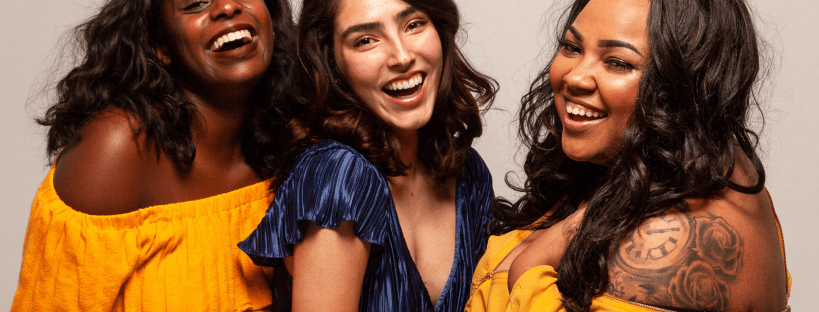
My Take on Feminism for People Who Don’t Like That Word

My earliest memories of the word “feminism” can be traced back to high school. I had an English teacher who shocked and awed the crowd at our conservative church when she prayed “Dear Mother.” I am a member of a protestant denomination of Christianity that doesn’t play with that our mother stuff—there’s lots to discuss there. But I digress. That was a big, big no no. And my 16-year-old self, OPENED HER EYES DURING PRAYER, to see if anyone was fainting of otherwise flipping out. Alas the gathering that day was much too pulled together to allow their indignation to surface too easily.

This teacher kept her maiden name even though she was married (still a bit of a taboo concept in the early 90s), and if I’m being honest, personified all the negatives one might associate with a feminist: angry, combative, man-abhorring (for the most part, she loved her husband and son), etc. Rumor had it she graded the boys harder than the girls. So, in my mind, if she was a feminist, I wasn’t sold.

I liked boys, I wanted to grow up and marry a man and didn’t mind taking his last name, and in my little world, I didn’t feel like males got in the way of anything I wanted to do.

So, I have since grown up. I got married to an amazing man and was happy to take his last name. But as I’ve become more and more engaged with politics and how it affects everyday life for women and men alike, I’ve thought about what it means to be a feminist.

Here’s the definition of the word “feminism”: the advocacy of women’s rights on the basis of the equality of the sexes.

Well, that’s not too scary is it? Women, as human beings and citizens have rights, and are entitled, just on the basis of their humanity, to other rights they deem in need of. Feminism advocates for that.

So, wait? Feminists aren’t a gang of angry man-haters, hell-bent on upended the world order and placing anyone identifying as male in gulags on the outskirts of town? Feminists aren’t highly educated, militant women who work outside the home and detest other women who have chosen more accepted paths from days of yore? Feminists can be straight females, married to men who bring home all the income, who stay at home and bake cookies (or not), volunteer for charities, and consider their homes the greatest career field in which they would ever consider working in?

Bear in mind, I’m working off of common stereotypes of both roles of “warring” women.

My point is this: some of us have been programmed to think feminism is a dirty word and if parts of you are more traditional in regard to feminine roles, you can’t possibly be associated with that.

Feminism to me is about women having the right to choose whatever path they feel most called to and that it is well within their rights as human beings to have those choices supported and even celebrated in society.

Feminist women do not want to rip stay-at-home moms from their lives and force them into 9-5 office jobs, so we’ll respect them. That ludicrous. Because in choosing to do what you wish for your life, much respect to you.

Feminist women want you to choose whatever the heck you want to do and know that you have the right to go for it. Do you want multiple degrees? Go to school, babe. Do you want to go to culinary school just for fun? Please invite me to your next dinner party. Are you leaning toward learning how to do hair and skin but only on a part-time level? Hit me up with your details when you’re ready. I’d happily support your business. Do you work outside the home and need support from family and friends with childcare? There is zero shame in that. Do you bring home the higher paycheck while your hubby stays home and has dinner ready when you return? Girl, you’re causing envy for many!

It doesn’t matter what your chosen lot in life is, as long as you get the right to choose it. And if you don’t, that’s where your fellow sisters are going to get ticked. We’ll likely picket in front of a pale building which houses a tantrum-prone and unprincipled misogynist in it.

Women have the right to choose their own adventures (hello 80s book reference). Just know that whatever it is, a true feminist thinks that you absolutely deserve to.

RBG the Renegade

Like many, I greatly respect Ruth Bader Ginsburg. I use present tense because though she is no longer with us, her legacy can’t be erased (though some may try). Anyway my utmost respect for her isn’t going anywhere.

Over the last couple of months, every time there was a news alert that she’d been hospitalized, both my husband and I would cry out into the ether, “Just hang on until November. Just hang on, Ruth!” And she’d battle back.

But Friday’s news alert gave us no opportunity to pray for her health. The news told us only what we feared would happen. That she had passed to her rest, and of course, what that awful news would mean in the light of Donald Trump and his hijacking of the Republican party; who for the most part, appear to blindly follow him no matter where he goes.

There is a lot at stake for progressive people if he is goes through with naming her replacement and the confirmation goes through.

So instead of wallowing in this bad turn of events (among nearly everything about 2020). I decided to learn more about this diminutive woman who wielded so much power–not just for her job, but who she was as a mighty, mighty, human being.

So, like so many I’m sure, I finally watched RBG on Hulu this morning. And goodness–was she a woman my heart loves. Brilliant, hardworking, funny, principled, disciplined, persistent, wise, and loving, yes loving.

What I love about a good documentary on a person is how you often get to see the human side of a legend. RBG was a woman who thought deep and went after things women of her day weren’t encouraged to do.

Her husband Marty, the love of her life, played a big part in her pursuit of law, being drawn to her brilliance and beauty at Cornell University. She married young (as women did in her day) and had a baby. And then she went to law school. For any woman who has balanced advanced studies while raising a family and nurturing a marriage–you know what that entails. But few probably know that Marty–also in law school at the time–went through a bout of cancer then. And it was Ruth who organized his friends taking notes in class for him (that she would type up late in to the night before tackling her own studies), and cared for him and their two-year-old girl while staying on top of her own work. And she excelled at it–all of it. That sort of stuff deeply resonates with me.

When she graduated and went to find a job, most law firms had firm policies about not hiring women. She eventually found her niche, growing both her family and her career. The cases she was drawn to were ones that could actually change the laws of the day–making life more equal for women in many arenas.

And then came the day when she was called to the Supreme Court of the United States–by a progressive president who recognized the type of talent and wisdom what could only serve this country well.

She and Sandra Day O’Conner were the only women on the bench at that time. And the fashion statement of her varied collars was something the two came up with together. The robes allowed room for a man’s tie to show–so they both wore something that let the whole world know they were women as well as justices of the highest court in the land.

While not a social butterfly, she was a friend to many. Even Justice Antonin Scalia–a man who was not the easiest person to befriend. An avid lover of opera, Ruth and Scalia actually starred in a production together. Their joint interviews showed the depth of their respect and care for each other, even if they had profound differences over the law.

Her life is filled with lots of lessons for us to learn from–especially in these times we find ourselves in.

If you don’t know much about RBG, watch the documentary of the same name. There are other films to check out as well. Read up on her. Watch interviews. It’ll likely make you sad that she isn’t here anymore, but hopefully it’ll give you a reason to stand up, speak out, and carry on her legacy in your corners of the world.

And a final thought–especially to all us sheep and snowflakes–vote. There is no sitting this one out no matter how much you dislike the Biden/Harris ticket. The last time some Americans let complacency rule the day, we got what we have now. An utter dumpster fire.

It’s time to douse it out and get rid of it–in her memory and to honor her incredible, incredible legacy.