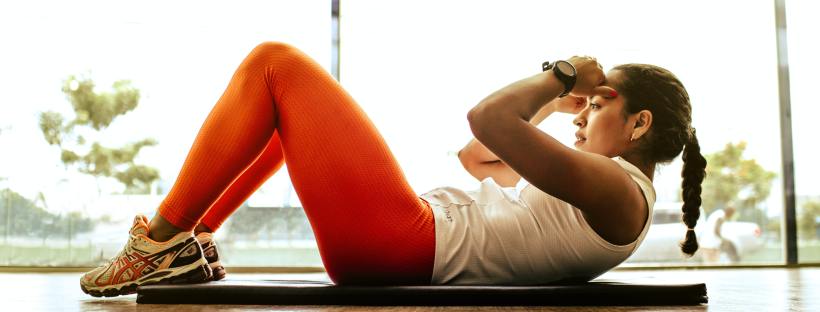
Do You Have an Exercise Personality?

In the 1980s, there was this actress who is now in her 80s and still getting arrested for protesting things she feels are unjust. Her name is Jane Fonda and while our parents might best know her for Barbarella or being called Hanoi Jane, she’s the one most credited for launching home workouts and an overall fitness craze that has only grown since then.

You can still find her workouts on Amazon Prime, and if you do check them out, you’ll notice some of her moves are still in play today in many group fitness classes. Now if you were down to don shimmery tights, a high cut leotard, and leg warmers, from an aesthetic point of view, her workout might have been right up your alley. But what if you weren’t? In this block of time where anyone who wanted to be bodaciously fit and young-looking subscribed to the aerobics trend and that wasn’t your cup of tea, were you relegated to a life of unfitness?

If you could track the trajectory of fitness trends since the 1980s, you would be well familiar with Reebok Step, Tae Bo, Hip Hop, Body Pump, dance cardio, dance sculpt, Insanity, Tracy Anderson, P-90X, Les Mills, Yoga, Pilates, OrangeTheory, Pure Barre, etc… I could go on. And this list doesn’t include walking, running, swimming, and traditional weight training.

Are we supposed to dip our toes into the pool of all of them? Of course not!

As fitness modalities have become better developed and accessible to the masses, it has become easier and easier to find activities that speak to us—your exercise personality.

A lot of people on the fence about committing to a fitness lifestyle find the idea of physical activity daunting. If you were to believe Instagram or Beach Body informercials it would appear that the path to a better body and greatly improved health involves doing some really hard stuff. Well, it doesn’t.

So, if you feel awful because you dread intense, high-energy workouts and when you have tried them you feel closer to death than anything, that’s ok. Does yoga numb your mind and body to absolute boredom? Do you need burpees and EDM to feel better? That’s cool too.

The point I’m making—and this is gleaned from a lot of years trying many different workouts, earning a personal training certification, and finally understanding that we are wired to do different things—is that each person has unique exercise DNA. The key to reaping all the benefits from a workout plan is to do what you are already hard-wired to do—and feel good about that.

How do you find out your exercise personality? You already know. Think about activities—if you aren’t intrigued, your body might be telling you that isn’t your workout. Even better is if you try something and feel worse for it, or don’t find a connection to it. If that’s the case, move on.

Your workouts should be something you feel good about returning to. They should be something you look forward to doing (for the most part—we all have our days it all sucks). We are lucky to be living in a digital age that has transformed the fitness world. Your greatest asset to finding modalities that are meant for you is YouTube, IG Tv, etc. Look up things. Watch how they are performed. Try something out. See how you feel and how you connect to it.

Most of all, don’t compare yourself to people you know or people you wish you knew on social media. You will get the most out of fitness if it is right for you. Find your unique path forward in the world of movement. At the end of the day, that’s all exercise is: moving your body. So align yourself with the style of movement that makes you feel good and be consistent.

And watch the Olympics this month. I tell you what—nothing is more inspiring to the goal of getting in shape than watching all those badasses tear it up in their particular sport!

You got this!

If you want to hear more about this topic, including the story of my first experience with OrangeTheory, subscribe to my podcast, The WiloPod.

Photo by Jonathan Borba on Unsplash

It’s Beginning to Look A lot Like … Weight Loss Lunacy Season

It’s starting. Weight Watchers commercials, social media ads for discounts off downloadable guides and programs, Nordic Tread testimonies and Peloton tidings of comfort and joy (in the form of lower scale numbers). After a pandemic Christmas where there was little else to do but hunker down and eat, following 10 months of the acquisition of quarantine cushioning for many, the annual race to finally claim one’s dream body is off. Because maybe, just maybe, summer beach vacations in 2021 can actually be a thing and everyone will want to celebrate that with a body to parade around (yuck, that shouldn’t even be a goal).

So, here’s my issue with this (and kind of with the fitness industry as a whole). Let me preface this by saying I’ve been an NASM certified personal trainer for five years. This has been a side hustle to my day job as a writer, editor, and creative producer. Needless to say, the day job has kept me plenty busy, which didn’t leave much time for pursuing job #2 in my off hours. That, combined with my own realizations about fitness and diet culture, and my conviction that many people wanting to lose weight also need some psychological conditioning (which is not my field), led me to “retire.” But I’m certainly not without a level of expertise in this field and I have some things to say, As people hurry to buy out Gymshark apparel and order their Booty Bands and protein powder off Amazon, please permit me to pop off.

  1. There are valid reasons for why weight loss/body goals kick off with a bang in January and die a quiet death around March. And that’s actually nothing to be ashamed of.
  2. There is a difference between getting fit and losing weight. The two are not synonymous.
  3. People with great looking bodies and desired scale numbers are not necessarily happier humans.
  4. The fitness industry, like pretty much everything in a capitalistic society, is designed to make money. Instilling guilt, shame, and panic in people is part of how you get that done.
  5. There are many medical professionals who are as clueless about weight loss, exercise, and how the body actually processes those things, as Regina George was in her Mean Girls quest to lose three pounds by only drinking cranberry-flavored sugar water (aka, juice). Example: Stop using office scales that don’t tell a fraction of the total story as as your most important metric for trying to motivate patients. More on that another time.

Can you tell I’m just a tad frustrated at this topic?

Here’s what I want people to know (my perspective, of course, but one that has taken me a long, long time to develop).

  1. Developing an exercise habit is not rocket science. Find something that moves your body in a way you enjoy and be consistent about it. Did you read that right? Do what you like. Keep doing it. That is all.
  2. Stop looking at Instagram pics of people with bodies you want to emulate. In the majority of cases, those looks are hiding what really goes into getting them: Expensive training programs, supplementation, and ridiculous diet techniques that are not sustainable.
  3. On that note, sustainability is key. Unless you are completely cool with eating eat cheese wraps and investing in copious amounts of grain substitutions and Costco Keto ice cream bars for the duration of your natural life, Keto is not your long-term salvation. You have to eat in a way that is sane and sensible for life.
  4. Living a fitter, trimmer, and healthier life is about nourishment and movement, as it best works for you.
  5. This is coming from my Christian perspective, but basically if it was food available in the Garden of Eden, it’s really good for you to eat. Like your mama has been telling you: eat your fruits and veggies. Stop demonizing natural foods and then think you’re better off shoving a synthetic protein bar into your mouth.
  6. If you are clueless about proper nutrition or have legit health conditions that call for a certain way of eating, the BEST way to navigate this is to see a registered dietitian. Not the sweet hippie at your favorite spa (unless there is an RD after her name), but a person who studied human nutrition and had to get board certified in that field. To be clear: your primary care provider does not have that in depth training the way an actual RD does. More power to you if your provider actually refers you to one. If you are going to invest in anything to help you become fit and healthy, invest in this.
  7. Don’t hop on any bandwagons. If your brother or sister does something, or your neighbor, or even your best friend who is also a nurse; that doesn’t mean that particular approach is right for you. We are all wired differently, so you must do what is right for you.
  8. Resist the January weight loss lunacy and focus on a long-term strategy of doing better for yourself by trying new ways to move, and find a registered dietician to help you. You’d honestly be surprised how much they despise all the fads that have become gospel for people trying to lose extra weight (low carb, keto, paleo, etc.).
  9. If you have to spend a lot of money on something (outside of home workout equipment which I pray you will actually use) in order to lose weight, don’t. Invest that money in an RD if your health plan doesn’t cover it. I can’t stress that enough.
  10. Here’s my final and easy tip, but by no means the last word on the topic of health and wellness: Tik Tok. I know, I know. Hear me out. There are many licensed, board certified dietitians and physicians using the platform to educate the public properly on nutrition and wellness. Do a search, check some accounts out. You might get some questions answered there, or at least find a starting point.

Stay sane, find a course, stay that course and just focus on being kind to yourself in 2021. Lord knows after 2020, we could all use more kindness—especially to ourselves.